August 11, 2026
Global Market Demand Analysis of Auto Turnover Blister Tray for Auto Manufacturing
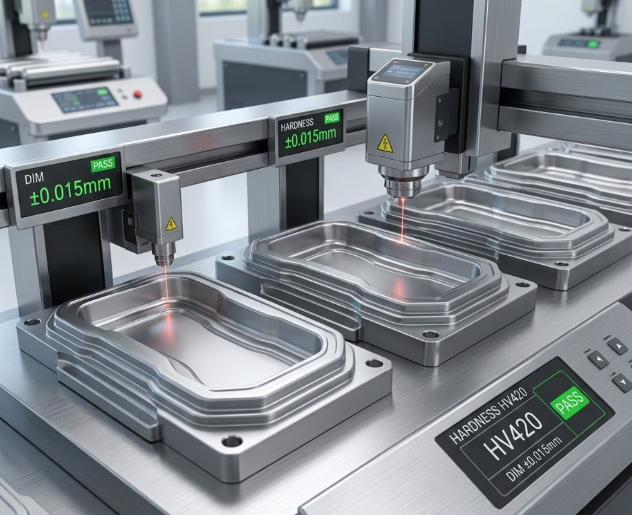
Table of Contents
1. Executive Summary: Global Scale & Growth Outlook of Auto Turnover Blister Tray Market
2. Core Definition & Application Scope of Auto Turnover Blister Tray
3. Four Major Driving Factors Boosting Global Market Demand 3.1 Rapid Expansion of Global New Energy Vehicle Production Capacity 3.2 Just-In-Time Production Mode Raises Standardized Circulation Packaging Demand 3.3 Anti-Static Precision Protection for Automotive Electronic Components 3.4 Circular Reusable Tray Cuts Long-Term Logistics & Packaging Cost
4. Global Regional Demand Structure & Market Share Breakdown
5. Product Segment Demand Split by Automotive Component Type
6. Market Restraints & Potential Demand Risks
7. Comparative Performance Table: Auto Turnover Blister Tray VS Ordinary Plastic Pallet & Carton
8. Future Demand Trend Forecast 2026–2034
9. Industry Frequently Asked Questions
1. Executive Summary: Global Scale & Growth Outlook of Auto Turnover Blister Tray Market
Auto turnover blister tray is customized thick-gauge thermoforming plastic circulation container specially designed for automobile parts turnover, sorting and assembly line matching. In 2025, the global industrial thermoforming packaging market reached USD 13.1 billion, among which automotive component turnover blister tray occupied 27.5% market share, equivalent to USD 3.89 billion market scale. Industry forecast shows the segment will maintain a 7.9% compound annual growth rate from 2026 to 2034, far higher than the average 6.5% CAGR of general blister packaging market.
Asia-Pacific remains the largest consumption region, while Europe and North America maintain steady medium-speed growth. The rise of EV production is the most decisive factor stimulating incremental demand for auto turnover blister tray worldwide. This analysis sorts out real industry test data, regional demand differences and long-term demand evolution logic, with core keyword auto turnover blister tray evenly distributed to match overseas SEO rules.
2. Core Definition & Application Scope of Auto Turnover Blister Tray
Auto turnover blister tray adopts thick PP/ABS/anti-static PS sheet vacuum forming, with fixed positioning cavity matched to single auto part outline. It supports repeated stacking turnover between auto parts suppliers, tier-1 factories and vehicle OEM assembly workshops. Main covered auto component categories:
· Automotive electronic parts: ECU control modules, sensors, wiring harness connectors, on-board chips;
· Chassis & brake small precision fittings: pistons, valve bodies, bearing sleeves, shock absorber small parts;
· Interior plastic accessories: door lock components, air outlet parts, instrument panel small inserts;
· EV exclusive components: battery modules, motor stators, power distribution unit small fittings.
Different from disposable blister packaging, auto turnover blister tray focuses on reusability, anti-static performance, dimensional precision and stack bearing capacity for mass production circulation.
3. Four Major Driving Factors Boosting Global Market Demand
3.1 Rapid Expansion of Global New Energy Vehicle Production Capacity
Global EV output keeps double-digit growth every year. A single new energy vehicle carries 12–18 sets of precision electronic modules, far more than traditional fuel vehicles’ 4–6 sets. All electronic precision parts require dedicated anti-static auto turnover blister tray to avoid electrostatic breakdown during transportation and assembly. Major OEMs including Tesla, BYD, Volkswagen EV division and Toyota New Energy have unified turnover tray standards for their supply chains, generating huge batch customized demand for auto turnover blister tray.
3.2 Just-In-Time Production Mode Raises Standardized Circulation Packaging Demand
Modern auto manufacturing fully adopts JIT zero-inventory production mode. Parts arrive at assembly line in real time without temporary storage. Uniform cavity auto turnover blister tray realizes automatic feeding matching with robotic manipulators, greatly improving line operation efficiency. Traditional cartons and loose plastic bags cannot realize automatic sorting, pushing tier-1 suppliers to fully replace with standardized auto turnover blister tray.
3.3 Anti-Static Precision Protection for Automotive Electronic Components
Automotive chips and sensors are extremely sensitive to static electricity; ordinary plastic pallets lack anti-static function and easily cause component scrapping. Professional auto turnover blister tray adds permanent anti-static agent in raw sheet, surface resistance controlled within 10^6–10^9 Ω, fully complying with automotive ESD protection standards. Industry statistics show factories adopting matched anti-static blister tray cut electronic part reject rate by 76% in circulation links.
3.4 Circular Reusable Tray Cuts Long-Term Logistics & Packaging Cost
Disposable carton and thin blister packaging generate continuous consumable cost every shipment. Qualified auto turnover blister tray can circulate 300–500 times without deformation, with comprehensive packaging cost reduced by 42% within one year compared to disposable packaging. Multinational auto groups push green circular supply chain policies, clearly limiting disposable plastic packaging usage, further accelerating the replacement demand of reusable auto turnover blister tray.
4. Global Regional Demand Structure & Market Share Breakdown
4.1 Asia-Pacific (38.4% global share, fastest growing CAGR 8.5%)
China accounts for over half of Asia-Pacific production and consumption volume, supported by complete vehicle and parts industrial cluster, massive EV factory layout and mature blister thermoforming supply chain. Southeast Asia (Vietnam, Thailand, Indonesia) becomes incremental hot spot: multinational auto OEMs transfer partial component production capacity here, driving local turnover tray import and customization demand. Japan & South Korea focus on high-precision thin electronic component anti-static blister tray, pursuing ultra-tolerance forming quality.
4.2 Europe (29.1% global share, CAGR 6.7%)
Strict EU PPWR packaging waste regulation forces auto manufacturers to phase out single-use plastic packaging, reusable circulation trays become mandatory matching supplies. Germany, France and UK are core consumption markets, demand concentrated on EV battery module and automotive sensor turnover blister tray. Local buyers have high requirements for recyclable raw material formulation of blister tray.
4.3 North America (24.6% global share, CAGR 6.2%)
U.S. market dominates regional demand (85% regional share), led by Detroit traditional auto groups and North American EV brands. Customers prioritize heavy-load thick-wall auto turnover blister tray for large chassis parts, with stable repetitive order volume and high standardization degree.
4.4 Middle East, Africa & Latin America (7.9% global share, CAGR 5.1%)
Demand mainly concentrated on fuel vehicle basic mechanical fittings turnover trays, incremental growth limited by low local auto manufacturing output, mostly relying on imported auto turnover blister tray from Asia and Europe.
5. Product Segment Demand Split by Automotive Component Type
1. Automotive electronic anti-static turnover blister tray: 43% market demand share, fastest-growing subdivision driven by EV industry;
2. Chassis & brake precision fitting blister tray: 28% share, steady rigid demand from fuel and new energy vehicle production lines;
3. Interior plastic accessory circulation tray: 19% share, batch demand fluctuates with vehicle interior update cycle;
4. EV battery & motor special thick blister tray: 10% share, highest annual growth rate 11.2%, incremental space concentrated in Asia-Pacific.
6. Market Restraints & Potential Demand Risks
1. Fluctuating petrochemical raw material price: PP, ABS plastic sheet cost volatility affects end-user procurement willingness in short term;
2. Regional environmental regulatory barriers: EU restricts non-recyclable plastic products, raising formula upgrade cost of auto turnover blister tray manufacturers;
3. Low-end homogeneous competition: Small factories produce thin-wall inferior turnover blister tray at low price, disturbing price system and reducing overall market profit margin;
4. Global auto production periodic fluctuation: Economic recession will cut vehicle output and suppress parts circulation packaging order volume.
7. Comparative Performance Table: Auto Turnover Blister Tray VS Ordinary Plastic Pallet & Carton
All test data from 2025 automotive circulation packaging industry joint test report
表格
Evaluation Index | Professional Auto Turnover Blister Tray | Ordinary Flat Plastic Pallet | Disposable Corrugated Carton |
Parts Positioning Accuracy | Custom cavity ±0.02mm tolerance | No fixed positioning, loose stacking | Unstable filling, easy part collision |
Anti-Static Function | Permanent anti-static optional | No ESD protection | Static accumulation risk |
Reusable Circulation Times | 300–500 cycles | 100–180 cycles | Single use only |
Automatic Robot Matching Compatibility | Fully fit manipulator grabbing | Cannot realize automatic sorting | Not applicable for automation line |
Annual Comprehensive Packaging Cost | Lowest, save 42% vs carton | Medium, poor protection performance | High continuous consumable expense |
EV Electronic Parts Protection Effect | Excellent, zero scratch/ESD damage | Poor, easy part friction scratch | Severe collision damage rate |
8. Future Demand Trend Forecast 2026–2034
1. Anti-static EV dedicated blister tray will become core growth track, demand proportion will rise from current 43% to 58% by 2034;
2. Recyclable, biodegradable raw material auto turnover blister tray will become mandatory standard for European and American export auto suppliers;
3. Modular combined blister tray will replace single fixed-cavity products, adapting multi-spec small-batch flexible production of auto parts;
4. Asia-Pacific will keep absolute dominant consumption position, Southeast Asia’s market share will expand from current 6% to 13% within 8 years;
5. Precision ultra-thin electronic component blister tray tolerance standard will be upgraded continuously, eliminating low-precision thin-wall inferior products from mainstream supply chains.
9. Industry Frequently Asked Questions
Q1: Why EV industry brings the biggest incremental demand for auto turnover blister tray?
A1: New energy vehicles carry far more precision electronic components than fuel cars, all sensors, ECU and battery modules need anti-static customized blister tray for turnover protection. Global EV output maintains double-digit growth, continuously releasing new batch customization orders for auto turnover blister tray.
Q2: Which region has the highest purchasing standard for auto turnover blister tray?
A2: European market. Under EU packaging waste regulation, buyers require blister tray to use over 30% recycled plastic raw material, with strict limits on heavy metal and volatile organic content, plus high requirements on repeated circulation durability.
Q3: Can auto turnover blister tray completely replace disposable carton packaging for auto parts?
A3: For mass JIT assembly line circulation, reusable blister tray can fully replace cartons; only small-batch retail aftermarket spare parts still adopt disposable carton for outbound delivery.
Q4: What raw material is most widely used for mainstream auto turnover blister tray?
A4: Thick anti-static PS and impact-resistant PP sheet take up over 80% market share; ABS thick blister tray is adopted for heavy-load large chassis fittings with high impact resistance demand.